HYDERABAD — A mosque is much more than a place where people gather five times a day for prayers. At its best, it is a living center of compassion, learning, and selfless service to humanity. Today, nestled in the bustling lanes of Red Hills, Masjid-e-Teenposh is breathing life into that very ideal, extending a vital helping hand to a community navigating the digital age.
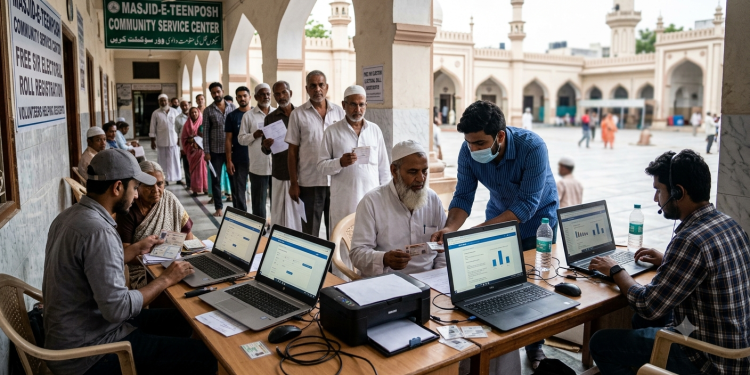
Walk into the mosque complex these days, and you will witness a beautiful transformation. Beside its traditional spiritual role, the mosque and its adjoining Imdadul Uloom Madrasa have taken on an inspiring new responsibility. Inside, the quiet hum of prayer is accompanied by the rhythmic clicking of keyboards. Three young software engineers sit hunched over laptops, deeply focused as they help local residents navigate the online enrollment process for the Special Intensive Revision (SIR) of the electoral rolls.
Bridging the Digital Divide
The initiative was born out of a keen observation by Moulana Obaidur Rahman Athar, the Khateeb of Masjid-e-Teenposh. Noticing a growing sense of anxiety among local residents struggling to complete the mandated online voter formalities, he realized that many—especially senior citizens and those unfamiliar with modern technology—were being left behind in a digital-first world.
Wanting to alleviate their stress and ensure no one lost their democratic voice, the Moulana reached out to the neighborhood’s youth, enlisting the services of computer-savvy professionals from the locality.
The result is a moving juxtaposition of faith, tradition, and modern civic duty. In one room of the madrasa, children are focused on memorizing the Holy Quran. Just a few steps away, a quiet queue of residents wait patiently with their identity cards, voter documents, and passport photographs as tech-savvy volunteers seamlessly upload their paperwork.
Driven by Pure Service
In an era where commercialization touches everything, this initiative stands out as a rare beacon of altruism. While local internet centers and digital photo shops charge anywhere between ₹100 and ₹200 to file a single SIR form, the service at Masjid-e-Teenposh is entirely free of cost.
“We are doing this purely as a service,” says Muhammad Amjad, an employee of Tata Tele Services at Shamshabad. Alongside fellow software engineers Irshad and Laeeq, Amjad has been dedicating several hours every day after his professional shifts to keep the camp running.
For these young professionals, the reward isn’t financial—it is deeply personal.
“It gives me immense satisfaction to help people,” shares Laeeq, who works for a tech firm based in Gachibowli. “We use our skills for corporate goals all day. Using them to help a grandmother or an elderly neighbor secure their civic rights is a completely different kind of fulfillment.”
More Than a House of Worship
For the hundreds of visitors who have walked through its doors over the past few weeks, Masjid-e-Teenposh has transcended its role as a house of prayer. It has become a profound source of comfort, support, and practical relief during a stressful time.
In a world that often highlights division, this small mosque in Red Hills stands as a reminder of what community spaces can achieve when guided by empathy. It shows that faith is not just found in ritual, but in the simple, powerful act of helping your neighbor type out a form.