Around the world, Muslims observe Eid Ul Adha (Bakrid) with solemn prayers, ritual sacrifices, and warm gatherings with loved ones. But in Hyderabad, the festival takes on a grander, more delicious dimension, rooted deeply in the city’s legendary culinary heritage.
The festive feast is an endless parade of rich, savory delicacies—from nihari, paaya, and marag to kaleji and gurda. The list just never ends. Yet, no matter how sprawling the dastarkhwan or how many contemporary desserts make the cut, a Hyderabadi Eid is never truly complete without a bowl of Qubani ka Meetha in hand.
The Story of the Humble Apricot
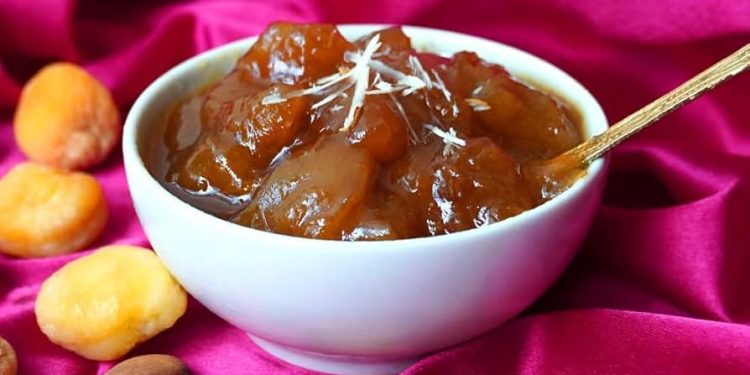
In Urdu, the word qubani simply means “apricot.” In its raw, dried form—wrinkled, dusty, and a muted orange—the fruit doesn’t look like much. Yet, Hyderabadi kitchens have a knack for turning the ordinary into the extraordinary, upgrading this humble fruit into a sweet celebration.
The history of Qubani ka Meetha winds straight back to the royal kitchens of the Nizams. Originally imported along ancient silk trade routes, dried apricots were treated as a prized luxury. Royal chefs perfected the art of transformation: they would slow-stew the fruit, simmer it in sugar syrup, and finish it with a dollop of rich cream.
Over generations, this closely guarded Nizami recipe spilled out of palace gates and into local households, tracing a delicious journey across changing eras, homes, and banquets to become the cultural staple it is today.
The Art of the Slow Simmer
In a Hyderabadi home, the sight of dried apricots soaking in a large bowl amidst the surrounding kitchen chaos is the ultimate sign that “Eid is tomorrow.”
The preparation begins the night before, letting the wrinkled fruit plump up and rehydrate overnight. Despite its royal pedigree, Qubani ka Meetha requires no rocket science, complex measurements, or professional chef-level expertise. All it asks for is patience, a sturdy vessel, and good quality apricots—which flood Hyderabadi markets in abundance just before Bakrid.
The next day, the soaked apricots are slow-cooked with sugar until it dissolves into a glossy, thick, jammy syrup that perfectly balances the fruit’s natural tartness. In true zero-waste fashion, the inner kernels of the apricot stones are cracked open and saved to add a nutty, almond-like crunch at the end.
Whether finished traditionally with a dollop of thick malai (cream) or given a modern twist with a scoop of vanilla ice cream, this is a recipe passed down through generations not by written weights, but simply by watching, tasting, and remembering.
The Perfect Finale to a Heavy Feast
Ask any Hyderabadi family to name their definitive Bakrid dessert, and Qubani ka Meetha will invariably top the list. While the festival brings an abundance of sweet treats, this apricot delight holds an irreplaceable spot on the table.
There is a practical brilliance to its popularity. Bakrid in Hyderabad is unapologetically a meat feast—extravagant, rich, and filling in a way that only Hyderabadi food can achieve. By the time the main course is done, you are full to the brim. Yet, because it’s Eid, refusing dessert is simply out of the question.
This is where Qubani gracefully steps in. Being fruit-based, its bright, tangy notes offer a refreshing contrast to the heavy savory dishes that preceded it. It is remarkably light on the stomach while delivering the perfect sweet finale.
Defying Trends: The Constant in a Changing City
Hyderabad’s dessert landscape has evolved dramatically over the years. The city has eagerly embraced global patisserie culture, welcoming everything from artisanal Biscoff cheesecakes to classic Italian tiramisus. Yet, through every passing culinary trend, Qubani ka Meetha has never lost its charm.
Instead, it has adapted. Walk into any upscale restaurant today, and you will likely find it wearing a contemporary makeover—served elegantly in fine glassware, layered into modern parfaits, or paired with rich rabri.
But even stripped of its gourmet upgrades, the classic, rustic Qubani stands alone. It remains one of the simplest, most enduring, and best-tasting desserts Hyderabad has ever known—proving that true heritage never goes out of style.