Every city has a pulse, but Hyderabad has a rhythm that shifts effortlessly between centuries. You can hear it in the chaotic buzz of Lad Bazar, feel it in the quiet shadows of Golconda, and see it in the glinting glass towers of Hitec City. But if you want to experience a place where the city’s vast history and fast-paced present physically collide, you need to stand on the platforms of the Kacheguda Railway Station.
This iconic landmark recently quietly hit a staggering milestone: 110 years of public service. While cities worldwide often trade their heritage for sleek, sterile concrete, Hyderabad’s Kacheguda stands as a brilliant reminder that progress doesn’t have to mean erasing the past.
The Nizam’s Grand Vision: Gothic Domes & Desert Wind
To understand Kacheguda, you have to rewind to June 10, 1916.
Inaugurated during the reign of the Last Nizam, Mir Osman Ali Khan, the station was originally built as the grand headquarters of the Nizam’s Guaranteed State Railway (NGSR). The Nizams didn’t just build transport hubs; they built architectural statements.
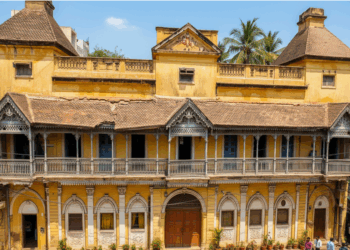
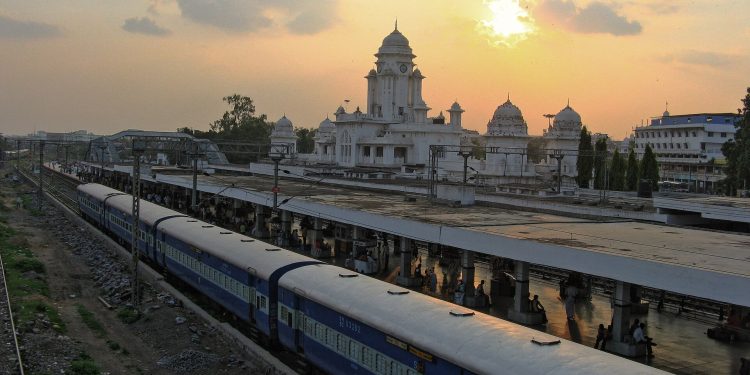
Stepping in front of the station feels less like preparing for a commute and more like arriving at a royal palace. Built in a distinct Gothic-style architecture, the facade is adorned with majestic central domes and towering minarets.
But here’s a piece of forgotten engineering brilliance: those stunning minarets weren’t just for show. They were designed as an organic cooling system, cleverly channeling natural drafts to draw in cool air and ventilate the bustling station during Hyderabad’s blistering summers.
The Clockwork of a Modern Transit Titan
Fast forward to today, and Kacheguda is anything but a sleepy relic. It has evolved into one of the four major railway terminals in Hyderabad and serves as the nerve center for the South Central Railway’s (SCR) Hyderabad Division.
Consider the daily choreography required to keep this 110-year-old monument running:
-
50,000 Passengers: The average daily footfall of travelers rushing to catch trains.
-
Pan-India Connectivity: The iron rails here link Hyderabad directly to major hubs like Delhi, Bengaluru, Chennai, Tirupati, and Indore.
-
₹60 Lakh Daily Revenue: The staggering financial contribution the station continuously pumps back into Indian Railways every single day.
What makes Kacheguda a modern marvel, however, is its green transformation. Instead of relying purely on the grid, the station is heavily powered by advanced solar energy systems. It stands as a model for sustainable infrastructure, boasting a Green Platinum rating and multiple environmental and energy conservation awards.
A Time Capsule on Platform 1
If you have an hour to spare before your train—or if you just love a good story—a visit to the Kacheguda Rail Museum tucked inside the premises is non-negotiable. Originally opened in 2015 and heavily revamped with modern multimedia features, it is a treasure trove for history buffs.
Inside, you’ll find:
-
Vintage Signalling Gear & Tickets: Rare, tactile pieces of tech from a time when railway operations required heavy iron levers and handwritten ledger books.
-
The “Sir Alec” Steam Engine: The undisputed crown jewel of the collection—a majestic steam locomotive built in 1907 that lets you look directly into the eyes of early 20th-century engineering.
-
Classic Meter-Gauge Coaches: Two beautifully preserved heritage train cars parked outside that instantly transport you back to the colonial travel era.
The Spirit of Hyderabad
As the evening sun sets behind Kacheguda’s towering central dome, casting long shadows across its five platforms, the station offers a beautiful poetic contrast. On one side of the tracks, a fully air-conditioned, solar-powered express train hums with high-tech efficiency; on the other, century-old Gothic arches stand firm, unmoved by the passage of time.
Kacheguda is a microcosm of Hyderabad itself. It proves that a city can fiercely sprint toward the future without ever letting go of the hands that built its past.
Have you ever visited the Kacheguda Rail Museum, or do you have a favorite memory of catching a train from this historic station? Let us know in the comments below!