On a windy Friday afternoon in Narsingi, the steady, rhythmic clang of heavy machinery echoes through a bustling construction site. High-rise towers are climbing steadily into the sky, reshaping Hyderabad’s ever-expanding horizon. But just a few meters away from the dust and the scaffolding, a completely different kind of building is taking place.
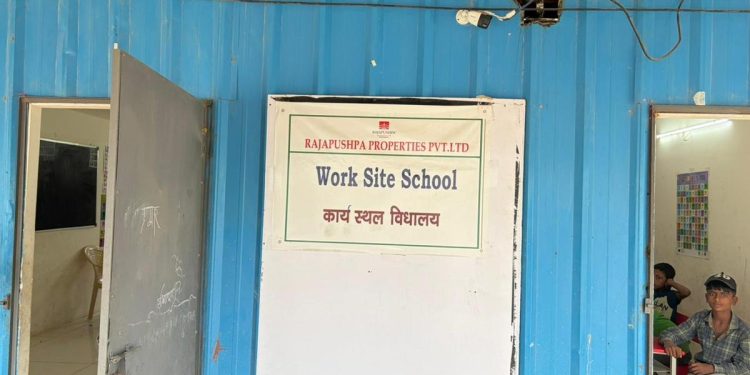
Inside a modest, repurposed room within the labor camp, 37 children sit huddled together, their eyes bright with focus. Their tiny slate boards are covered in chalk-scribbled English letters. One by one, they eagerly raise their hands, competing for the chance to read aloud the words they have just mastered.
For these children, all under the age of ten, moving from state to state with their migrant worker parents used to mean one thing: leaving their education behind. But today, things are changing. Instead of the children chasing the school, the classroom has come to them.
A Desk on the Move
Migrant communities form the invisible backbone of Hyderabad’s real estate boom. Families travel thousands of miles from states like Odisha, Bihar, and Chhattisgarh, moving wherever the construction contracts take them. In the shuffle, children are often the ones who pay the heaviest price, facing constant disruptions to their schooling, language barriers, and the sheer safety hazards of living on active construction sites.
Launched this past May, the Narsingi work-site school is a vital intervention. It transforms a vulnerable environment into a safe haven of learning and literacy.
“For these kids, school is no longer something left behind when their families move from one construction site to another,” notes a project volunteer. “It provides them stability in an otherwise transient life.”
Safety and Schooling Under One Roof
The beauty of the work-site school model lies in its dual impact:
-
Uncompromised Safety: Parents can work on the high-rise towers with peace of mind, knowing their toddlers and young children aren’t wandering unattended near heavy machinery.
-
Continuous Education: Rather than dropping out due to a lack of local language proficiency or complex enrollment processes, children get immediate access to foundational English, math, and vernacular language lessons.
The success of the Narsingi camp has already sparked a chain reaction. With the model proving both effective and deeply necessary, organizers are already preparing to scale the initiative, with two more work-site schools set to open across the city’s major construction hubs shortly.
The New Face of Hyderabad
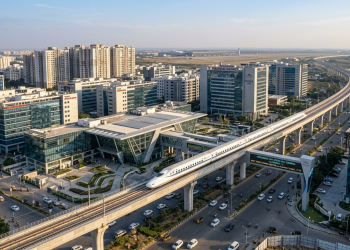
Hyderabad is a city that prides itself on growth, technology, and a forward-thinking future. But true progress isn’t just measured by the height of our glass facades or the speed of our metro lines. It is measured by how we treat the people who build them.
As these 37 children loudly recite the alphabet over the hum of concrete mixers, they aren’t just staying out of harm’s way—they are building a foundation for a life beyond the labor camps. The skylines of Hyderabad are changing, and thankfully, so are the futures of the children watching them grow.