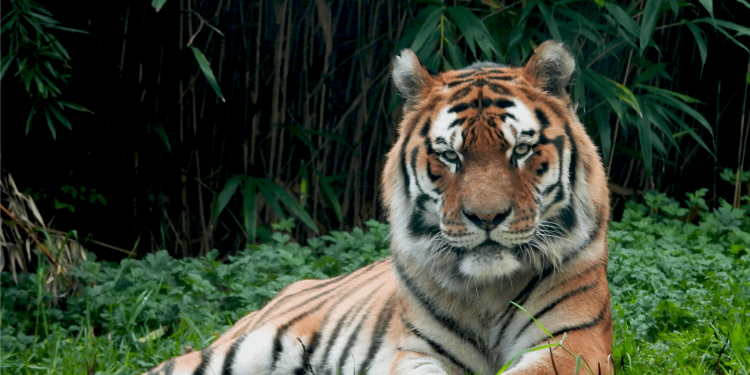
We’ve all been there. You’re walking through the Nehru Zoological Park in Hyderabad, or any major zoo across India, and you stop to admire a tiger. It paces along the enclosure wall, lets out a magnificent roar, and eagerly devours its afternoon meal. To the average visitor—and even to traditional zoo inspectors—this animal looks healthy, active, and perfectly content.
In fact, these exact visual behaviors form the backbone of the official “Care in Captivity” scorecards used by zoo authorities to declare that an animal is thriving.
But a groundbreaking discovery from a high-tech genetic laboratory right here in Hyderabad has just proved that what we see on the surface is a dangerous illusion.
The Flaw in the “Visual Check”
For decades, evaluating the well-being of captive wildlife has been largely qualitative. If an animal isn’t visibly skeletal and isn’t exhibiting obvious signs of physical injury, it generally passes inspection.
The scientists at the Laboratory for the Conservation of Endangered Species (LaCONES), a specialized wing of the Centre for Cellular and Molecular Biology (CCMB) in Hyderabad, knew this approach was deeply flawed. Visual indicators are highly vulnerable to human bias. Worse, they completely miss the early, silent stages of internal physiological distress. An animal might look perfectly calm to a crowd of visitors while secretly suffering from severe, long-term stress.
To fix this, LaCONES-CCMB has introduced an innovative framework called Precision Captive Management. Think of it as a comprehensive “genetic audit” for zoo animals.
Inside the Science: What is a Bio-Score?
Historically, checking an animal’s internal health required invasive blood draws. The irony? The sheer panic of being restrained for a needle prick spikes an animal’s stress levels, completely skewing the results.
The LaCONES team bypassed this issue entirely by developing a non-invasive “bio-score” system powered by Fecal Glucocorticoid Metabolite (FGM) analysis.
Instead of tracking a single, flawed “snapshot” in time, scientists extract and analyze hormonal footprints left behind in the animal’s waste. This allows them to monitor stress levels objectively over days, weeks, or even months.
The data gathered from this forensic-level bioscoring offers two massive advantages:
-
Uncovering Hidden Distress: It identifies chronic anxiety and trauma in animals that appear entirely normal on the outside.
-
Predictive Power: It can pinpoint if an animal’s internal stress is high enough to silently cause future behavioral breakdowns or completely inhibit their reproductive success.
By catching these hormonal warning signs early, zookeepers can adjust enclosures, diets, or social groupings before a crisis occurs.
The 2026 Hurdle: Making Science Mandatory
The technology is ready, tested, and capable of fundamentally transforming how wildlife is managed in captivity. However, as of 2026, this forensic health scoring remains a strictly voluntary tool.
Senior researchers at LaCONES-CCMB are pushing for a vital regulatory shift. For this breakthrough to truly safeguard India’s captive wildlife, the Central Zoo Authority (CZA) needs to officially integrate the bio-score into its national rulebook.
Shifting from subjective visual checklists to mandatory, evidence-based scientific audits is the only way to ensure that the animals in our care are genuinely thriving—not just putting on a show.