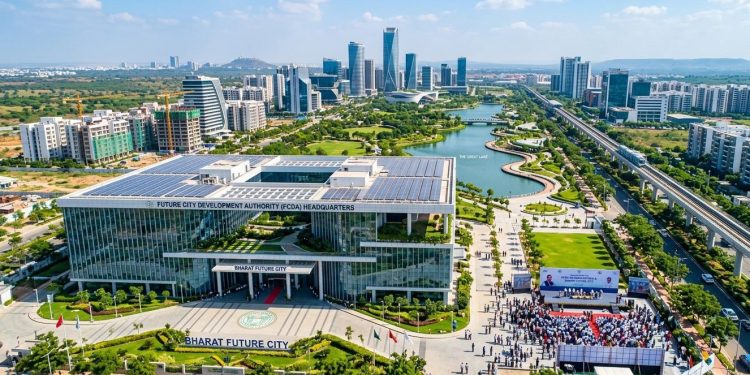
HYDERABAD – In the narrative of Telangana’s development, there are distinct eras that define our landscape. We remember the administrative roots of Hyderabad, the commercial connectivity of Secunderabad, and the tech-led revolution of Cyberabad. Today, we stand on the cusp of a fourth, perhaps most ambitious, chapter: Bharat Future City.
A Vision Born from Global Wisdom
The state government is not building in a vacuum. By looking to the meticulous urban planning of Singapore, the technological efficiency of South Korea and Japan, and the sustainable infrastructure models of Germany, the FCDA (Future City Development Authority) is crafting a blueprint that aims to compete with the world’s most advanced metropolises.
The vision is clear: create a net-zero, high-tech hub that prioritizes innovation, sustainability, and economic growth while ensuring that the “lake economy” and green spaces remain at the heart of the urban experience.
Speed as a Statement
The most compelling evidence of this project’s viability is not just the plans on paper, but the progress on the ground. In an era where infrastructure projects are often bogged down by delays, the FCDA headquarters was conceptualized, built, and inaugurated in less than six months. This rapid execution signals a shift in administrative culture—one defined by commitment and urgency.
Powered by People
Perhaps the most surprising—and heartening—aspect of this project is the grassroots response. Unlike traditional urban expansions that often face friction, the Future City is seeing an influx of voluntary support. Numerous neighboring villages, recognizing the economic potential, have formally requested to be integrated into the FCDA limits.
When local public representatives and residents actively petition to be part of a new urban future, it signals something deeper than just development; it signals trust.
The Road Ahead
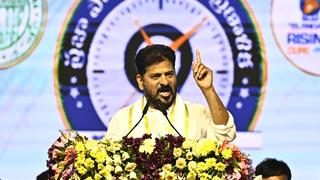
As Deputy Chief Minister Bhatti Vikramarka noted from the inauguration dais, the goal is to make this project “a jewel in Telangana’s development story.” By bridging the gap between historical heritage and futuristic ambition, the government is aiming to build a city that is not only a hub for Fortune 500 companies and AI-driven industries but a place where every Indian’s aspiration for a well-managed, modern life can take root.
The foundation is laid. The mandate is clear. The future of Telangana is no longer a distant goal—it is being built, one village and one headquarters at a time.